Are you executive ready? The seven executive readiness signals every senior leader should know

You've built a strong career.
You're leading teams, delivering results, and trusted to get things done.
From the outside, it looks like you're already operating at a high level.
So why does executive leadership still feel like the next, slightly out-of-reach step?
Over the years working with senior women, I've noticed a consistent pattern.
Many are already performing at a level that could position them for executive leadership.
But they haven't always been shown how executive readiness is actually assessed.
Because at senior level, progression stops being about performance alone.
It becomes about something different.
Executive leadership is a different game
In the early and middle stages of a career, success is often measured by delivery.
- Can you get things done?
- Can you lead your team effectively?
- Can you solve problems under pressure?
These capabilities are essential, and they build your credibility.
But as you move closer to executive leadership, the expectations shift.
Decision-makers begin to look for something beyond operational excellence.
They are looking for evidence that you can operate at a broader, more strategic level across the organisation.
And that shift is often where very capable leaders get stuck.
Not because they aren't ready.
But because the signals of readiness are often implicit rather than clearly defined.
The 7 Executive Readiness Signals
To bring clarity to this, I often use a simple framework with clients.
It helps identify the key areas that tend to influence whether someone is seen as executive ready.
These are not rigid rules or checklists.
They are patterns that often show up when leaders are progressing towards executive roles.
1. Strategic Thinking
Do you consistently contribute beyond immediate operational demands and shape longer-term thinking within your area?
2. Executive Visibility
Are senior stakeholders aware of your work, perspective and contribution—or is most of your impact happening below the surface?
3. Organisational Influence
Can you influence decisions beyond your direct team or function, even when you don't have formal authority?
4. Executive Presence
Do you communicate with clarity, confidence and authority in senior-level conversations and high-stakes environments?
5. Leadership Impact
Are you developing others, driving meaningful change, and contributing to broader organisational outcomes—not just delivery within your remit?
6. Commercial & Business Perspective
Do you understand how decisions link to wider organisational performance, priorities and commercial outcomes?
7. Executive Positioning
Are you already perceived as someone operating at executive level—or are you still being seen primarily through your current role?
Why this matters
Most senior women I work with are strong in several of these areas.
But very few have had the opportunity to step back and assess all seven together.
Which means progression conversations often feel unclear or inconsistent.
Sometimes you're seen as "ready."
Other times you're not.
And it can be difficult to understand why.
Executive readiness can be developed
The important thing is that these signals are not fixed.
They can be developed intentionally.
Once you understand what executive leadership actually requires, you can begin to shift how you show up, how you're perceived, and how your contribution is recognised.
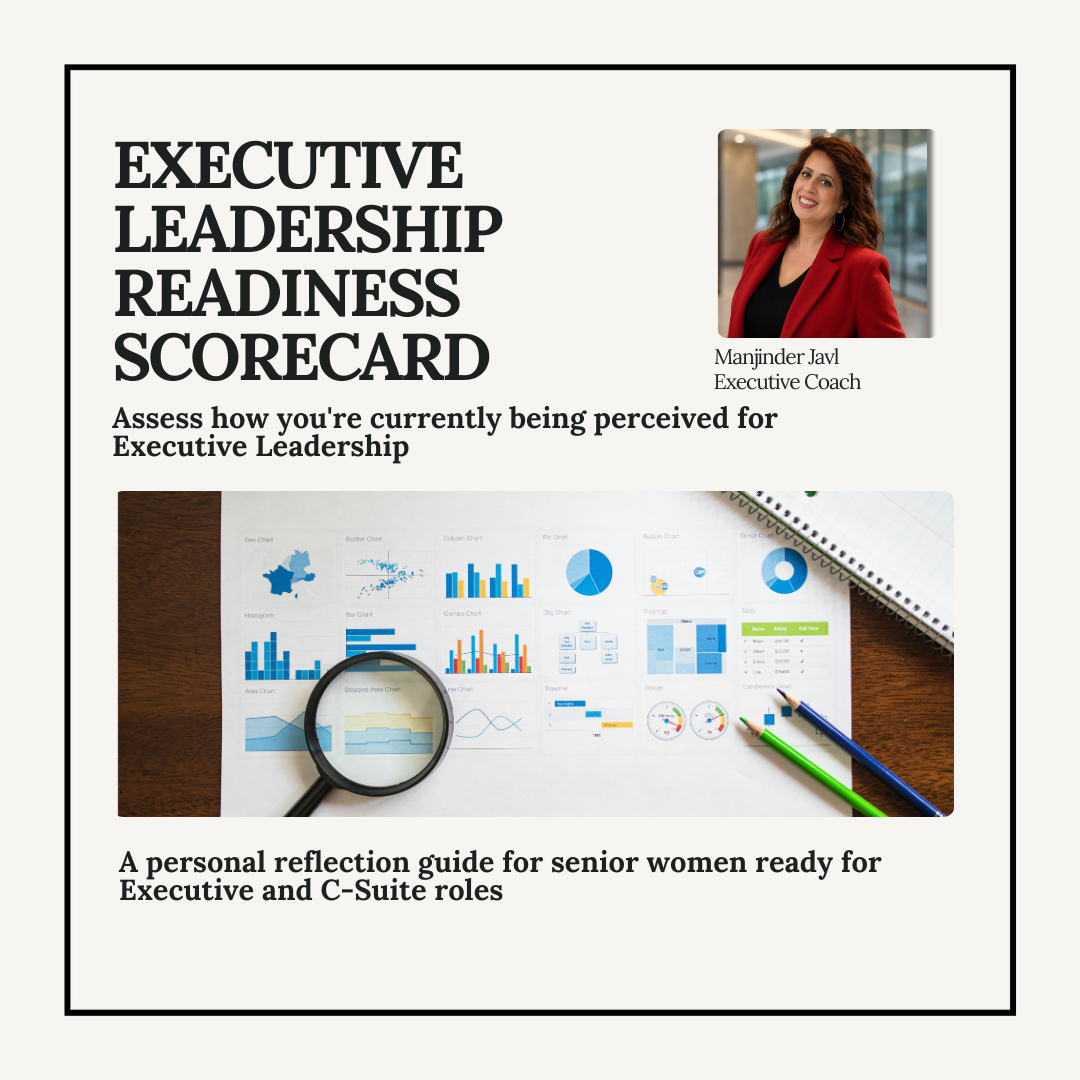
This is exactly why I created the Executive Leadership Readiness Scorecard.
It helps you reflect on these seven signals in a structured way, so you can identify where you're already strong and where there may be opportunities to strengthen your executive profile.
An invitation
If you're a senior leader who suspects executive leadership may be your next step, the first move isn't to do more.
It's to understand how you're currently being perceived at executive level.
If you'd like to explore that, you can access the Executive Leadership Readiness Scorecard here and use it as a reflection tool for your own progression.
I'd be interested to hear your perspective:
Which of these signals do you think is most overlooked when it comes to executive progression?


