Career = Small Business: The CEO Mindset That Changes Everything
Published on
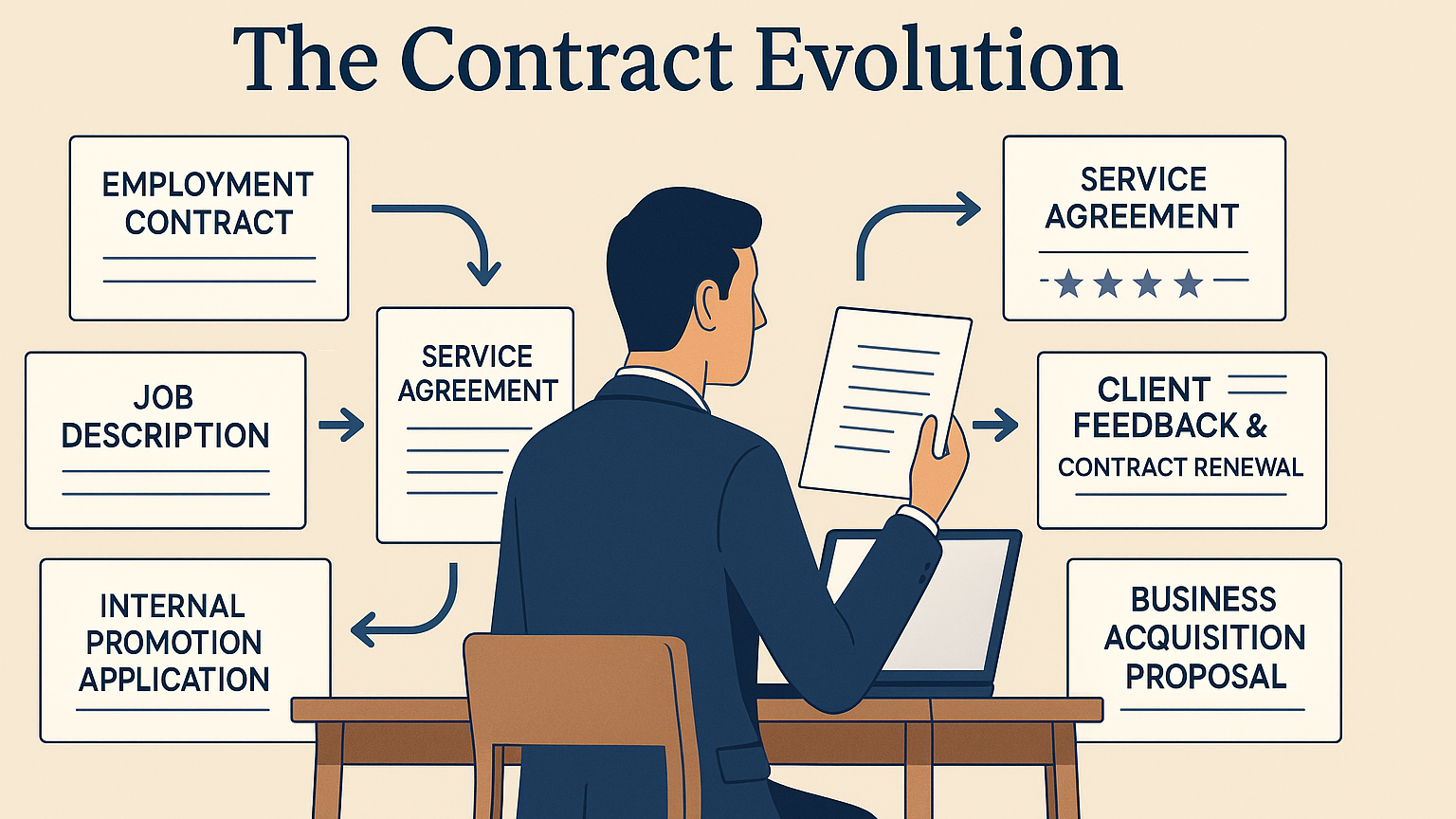
Same person, same work — completely different mindset.
Why the most successful professionals think of themselves as companies, not employees
I still remember the moment it clicked. I was coaching a brilliant MBA graduate at Oxford who handed me their CV—impressive credentials, polished language, all the right business terminology. But something was missing.
"You've added an MBA to your old resume," I told them. "But you haven't changed how you see yourself."
That conversation sparked a realisation that has shaped how I approach career coaching ever since: Your career is not a sequence of jobs. It's a small business. And you are the CEO.
The Lemonade Stand CEO
Picture this: A group of friends at a pub, sharing stories over beer. One friend, now the CEO of a successful company, laughs as he tells us about his "first business venture"—a lemonade stand he ran with his younger brother and neighbor when he was eight years old.
We all chuckled. Classic CEO origin story, right?
But later, I couldn't stop thinking about it. That eight-year-old boy didn't know he was practicing leadership when he organized his team of three. He didn't realize he was doing customer service when he smiled at every person who approached their table. He had no idea he was managing operations when he figured out the optimal lemon-to-sugar ratio.
The boy didn't know. But the CEO looking back could see exactly what he had been doing: running a business.
When Technical Becomes Strategic
My own awakening came during my time as a release manager and researcher for IBM DB2. I was called into a meeting room filled with people wearing red shirts and red hats on one side, blue shirts and blue hats on the other. It looked like corporate cheerleading—strange, but I didn't think much of it.
They asked me how we could integrate two different code bases. I focused on the technical intricacies, dealing with some unfamiliar faces who mentioned they were "new to IBM" (the blue team). To me, it was just another technical challenge.
Years later, during my MBA at Oxford in a course on M&A and strategy implementation, it hit me like lightning: That wasn't just a technical meeting. That was IBM acquiring Informix (the red team). Those unfamiliar faces were change management agents. I had witnessed—and participated in—post-merger integration.
My past self saw a technical problem. My MBA-educated self recognized a strategic transformation.
Same person. Same experience. Completely different understanding.
The Two Mindset Shifts
This is where most professionals get stuck. They polish their past achievements (often exaggerating them) while completely missing what they could become. The shift from employee to CEO of "You, Inc." requires two fundamental changes:
1. Retrospective Reframing: Your Past with New Eyes
Look back at your experiences through the lens of who you are today. That summer job managing inventory? You were handling supply chain operations. That time you organized the office holiday party? You were managing stakeholder engagement and event logistics. That project where you had to convince skeptical colleagues? You were leading change management.
Don't minimize your experiences because they weren't "C-suite" roles. Every interaction, every project, every challenge was preparing you for something bigger—if you can see it clearly.
2. Prospective Positioning: What You Sell, Not What You've Done
Here's where it gets interesting. Stop thinking about what your degrees and achievements are. Start thinking like a company: What do you sell that the market needs? What value do you generate?
A career coach once asked me what I wanted to do. "I want to be a CEO," I replied confidently.
"What does a CEO do?" he asked.
"Makes decisions that have strategic implications for the growth of the company."
"Good. Go home, incorporate 'Homy Inc.,' and come back next week to tell me the three most important decisions you need to make."
That simple exercise changed everything.
Welcome to You Inc.
Here's your assignment: From today forward, you are not an employee looking for your next job. You are the CEO of "You Inc."—a company that happens to have a staff of one. (Replace You with your name!)
The good news: You can never get fired. The bad news: All decisions are yours.
Now approach the market not with your resume, but with your value proposition. When someone asks what you do, don't list your job title. Explain what problems you solve and what opportunities you create.
This isn't just semantic wordplay. It fundamentally changes how you think, act, and present yourself. CEOs don't wait for permission—they identify opportunities. CEOs don't just follow instructions—they solve problems. CEOs don't just manage tasks—they create value.
From Story to Narrative
Author John Hagel makes a crucial distinction: Stories point to the past; narratives point to the future. Your resume is a story. Your vision is a narrative.
Most professionals spend all their time perfecting their story—polishing past achievements, explaining previous roles, justifying career changes. But the market doesn't buy stories. It buys narratives.
Your narrative answers these questions:
- Where is your industry heading?
- What opportunities do you see that others miss?
- How will you create value in tomorrow's marketplace?
- What problems will you solve that don't exist yet?
The Thread That Connects Everything
This CEO mindset isn't just about career advancement. It's the foundation for everything else:
- Career growth
- Leadership development
- Business exit planning
Whether you're looking to grow your career, develop as a leader, or eventually plan your business exit, it all starts with the same fundamental shift: seeing yourself as the CEO of your own enterprise.
Your First CEO Decision
So here's my challenge to you: What are the three most important strategic decisions facing "You, Inc." right now?
Not your tasks for tomorrow. Not your goals for next year. Strategic decisions that will determine the future direction and value of your personal enterprise.
Write them down. Because that's what CEOs do—they make decisions that matter.
Welcome to the C-suite. Population: you.
_____________________________________________________________________________________________________
Ready to think strategically about your career as a business? The next step is building the leadership mindset every CEO needs. I offer focused 60-minute coaching sessions to help you gain clarity, define your value, and make the next three strategic decisions for “You, Inc.”
Book your Career Clarity Session through my Accomplishr profile.
About Homy:
Dr. Homayoun (Homy) Dayani-Fard is a leadership coach and exit strategist with over 20 years of experience in consulting, banking, and founder advisory services. He helps business owners and senior leaders navigate critical transitions with clarity and confidence. For more information, visit: https://www.growthwithpurpose.com


