The Connection Between Vaping and Air Quality for Health Reasons.

Introduction
When we think of air quality, most of us picture smog-filled cities, pollen in the spring, or dust in our homes. But one factor that often goes unnoticed is how personal habits, like vaping, affect not only the person inhaling but also the environment around them. While vaping is often marketed as a “cleaner” alternative to smoking, its impact on air quality, and therefore health, deserves a closer look.
Vaping: More Than Just “Water Vapor”
One of the biggest misconceptions is that vaping releases harmless water vapor. In reality, e-cigarette aerosol contains:
Nicotine – addictive, altering brain chemistry and cardiovascular health.
Ultrafine particles – small enough to penetrate deep into the lungs.
Heavy metals like nickel, tin, and lead from the device’s heating element.
Flavoring chemicals such as diacetyl, linked to lung disease.
These particles remain in the air after exhalation, lowering air quality and creating risks for those nearby.
Everyday Environments Where Vaping Matters
🚗 In the Car
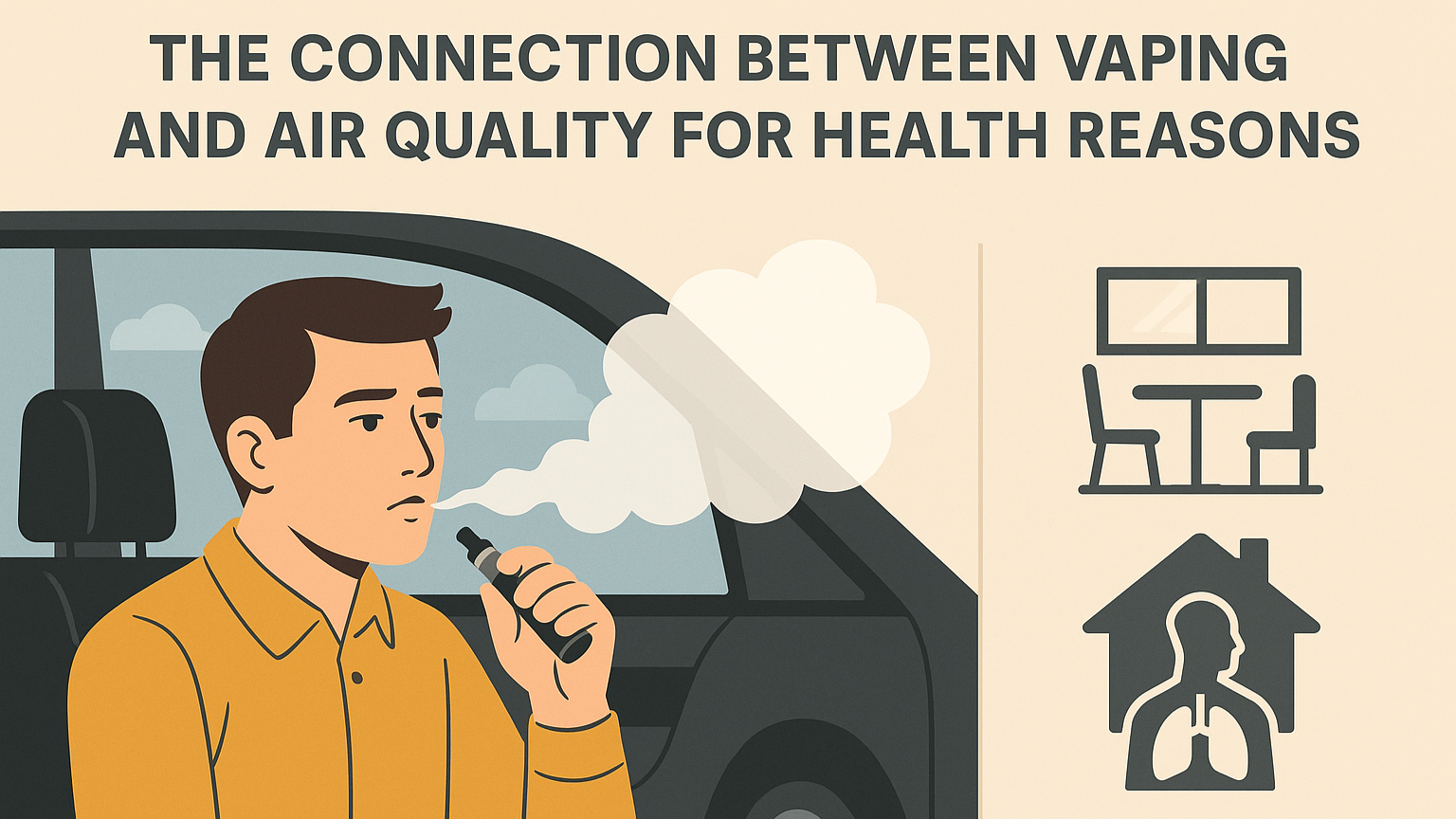
Cars are small, enclosed spaces where air circulation is limited, even with the windows cracked. Vaping inside a vehicle means particles linger on seats, dashboards, and ventilation systems. This creates “thirdhand exposure,” where harmful residues stick to surfaces and can be inhaled later, especially by children riding in the backseat.
🏢 In Workspaces
Many workplaces now restrict vaping, but even in offices or shared work environments where it’s allowed, the impact is real. Air-conditioning systems can circulate aerosol throughout the building, affecting non-vapers. For coworkers with asthma, allergies, or chronic respiratory issues, exposure can lead to headaches, irritation, or reduced concentration. Clean, breathable air is part of workplace well-being, and vaping compromises that.
🏠 In the Home
At home, vaping might feel less harmful than smoking indoors, but it still alters air quality. Residues settle into carpets, furniture, and curtains, reducing overall air freshness. For families with children, babies, or pets, exposure becomes a daily health risk. Unlike outdoor environments, homes trap these particles, making the air less clean than many realize.
The Cumulative Effect of Moving Between Spaces
Another overlooked factor is the repetitive transition between different environments. For example:
Someone vapes inside a car, then enters a workspace, and later comes home to their family.
Each shift brings traces of particles, odors, and residues from the smaller, enclosed environment into the next, often larger, space.
Over time, this cycle builds layers of exposure for both the individual and those around them, creating a ripple effect of reduced air quality in multiple places.
This “carry-over” effect means vaping doesn’t just stay where it happens; it follows you, your clothing, your breath, and even the surfaces you touch.
Effects on the Brain, Body, and Health
🧠 The Brain
Nicotine in vape aerosol alters brain chemistry by releasing dopamine, creating addictive cycles. For young people, vaping can disrupt brain development, affecting memory, attention, and impulse control. Even for adults, frequent nicotine exposure changes how the brain regulates mood and stress, increasing reliance over time.
💪 The Body
Vaping impacts more than the lungs:
Cardiovascular system: Raises heart rate and blood pressure, increasing strain on the heart.
Respiratory system: Irritates airways, leading to coughing, shortness of breath, or lung inflammation.
Immune system: Particles and chemicals weaken the body’s defense against illness, making it easier to get sick.
⚠️ Preexisting Health Concerns
For people with asthma, COPD, heart disease, or allergies, vaping compounds existing risks. Airway irritation can trigger asthma attacks, while increased heart strain can worsen cardiovascular conditions. Even those with anxiety or depression may find vaping worsens symptoms over time, as nicotine dependency can heighten stress when the body craves its next “hit.”
The Broader Public Health Angle
Air quality isn’t only a personal concern; it’s a community one. Poor air quality, whether from pollution, smoking, or vaping, puts a strain on healthcare systems, increases the risk of chronic illness, and influences quality of life. When vaping becomes normalized indoors, whether at home, at work, or in cars, it quietly shifts what “clean air” really means.
What You Can Do
If you or someone you care about vapes, here are some ways to protect health and air quality:
Avoid vaping in enclosed spaces such as cars, offices, or bedrooms.
Designate outdoor areas for vaping to protect family members and coworkers.
Improve ventilation with air purifiers or open windows when possible.
Be mindful of transitions, changing clothes, washing hands, or freshening up after vaping in a reduced space before entering shared environments.
Explore healthier coping strategies such as mindfulness, exercise, or counseling to address the reasons behind vaping.
Conclusion
Air quality is one of the most basic, and most important, foundations of health. Vaping may seem like a safer choice than smoking, but it still affects the air we all share, in cars, workspaces, and homes. It doesn’t just stay where it happens; it moves with us, follows us into new environments, and impacts the brain, body, and preexisting health concerns. By making mindful choices, we can protect not only our own lungs but also the well-being of those around us.


