AI Readiness Is About Operational Maturity, Not Just Technology


One company I came across had the best AI tooling of anyone in its sector. Enterprise licenses, an internal model, a dedicated platform team that knew what it was doing. It was also one of the slowest to get any real value out of any of it. Every team used the tools differently, nobody quite agreed on what a finished, trustworthy output looked like, and the people who best understood the risks were not the people making the calls. The technology was ready. The organization was not.
If you are well into your AI journey, that gap will feel familiar. And it points at something most readiness conversations miss.
What readiness means changes as you mature
Early on, readiness genuinely is mostly a technology question. Do we have access to capable tools. Do people know they exist. Have we cleared the basic hurdles to start. That framing is correct, for a while.
Past a certain point it flips, and this is the turn that matters. The bottleneck stops being capability and becomes coordination. The hard part is no longer getting the technology. It is whether the organization can make consistent, defensible decisions about how that technology gets used, again and again, across teams that do not talk to each other much.
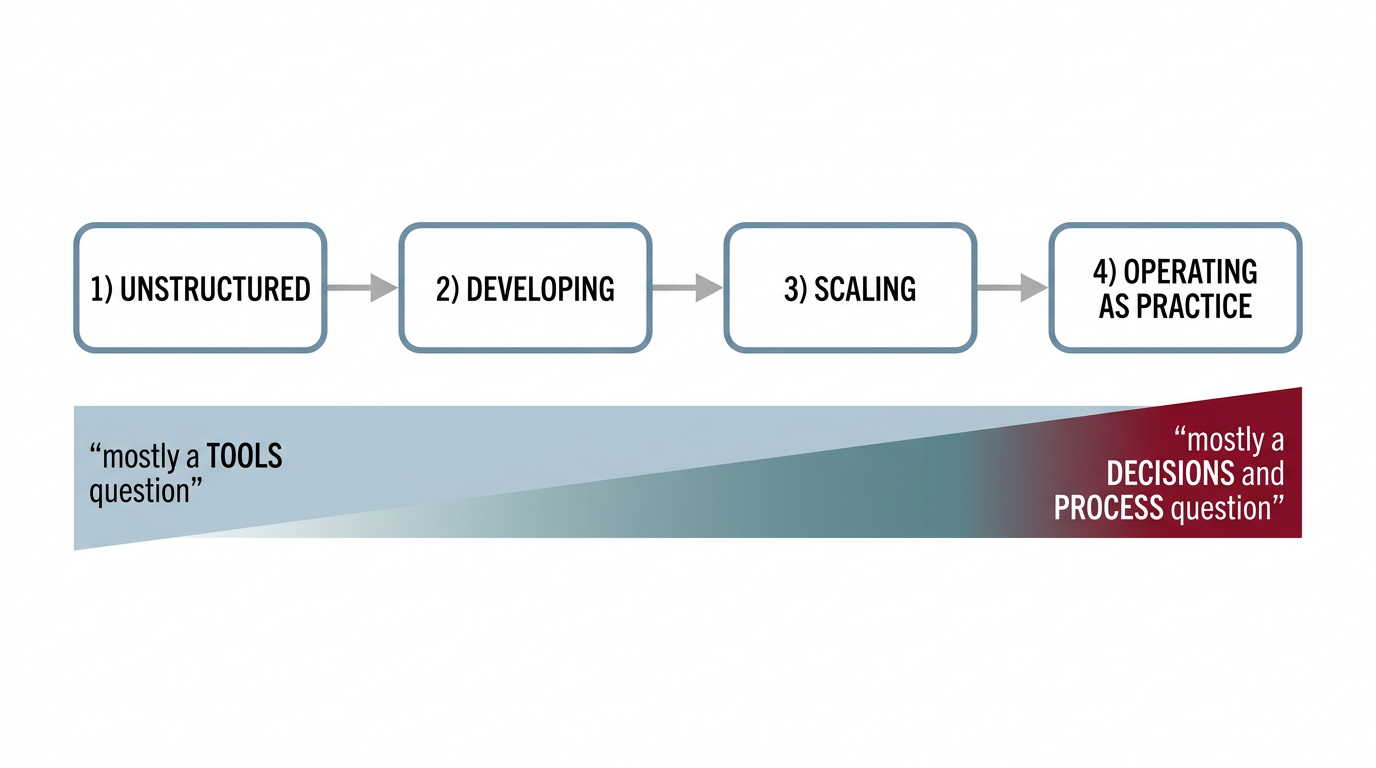
Maturity, in other words, stops being something you buy and becomes something you operate. That is not a downgrade of the technology’s importance. It is a recognition that, at the top end, the technology is rarely the thing holding you back.
What actually changes at this stage
A few shifts tend to arrive together once an organization is past the early scramble.
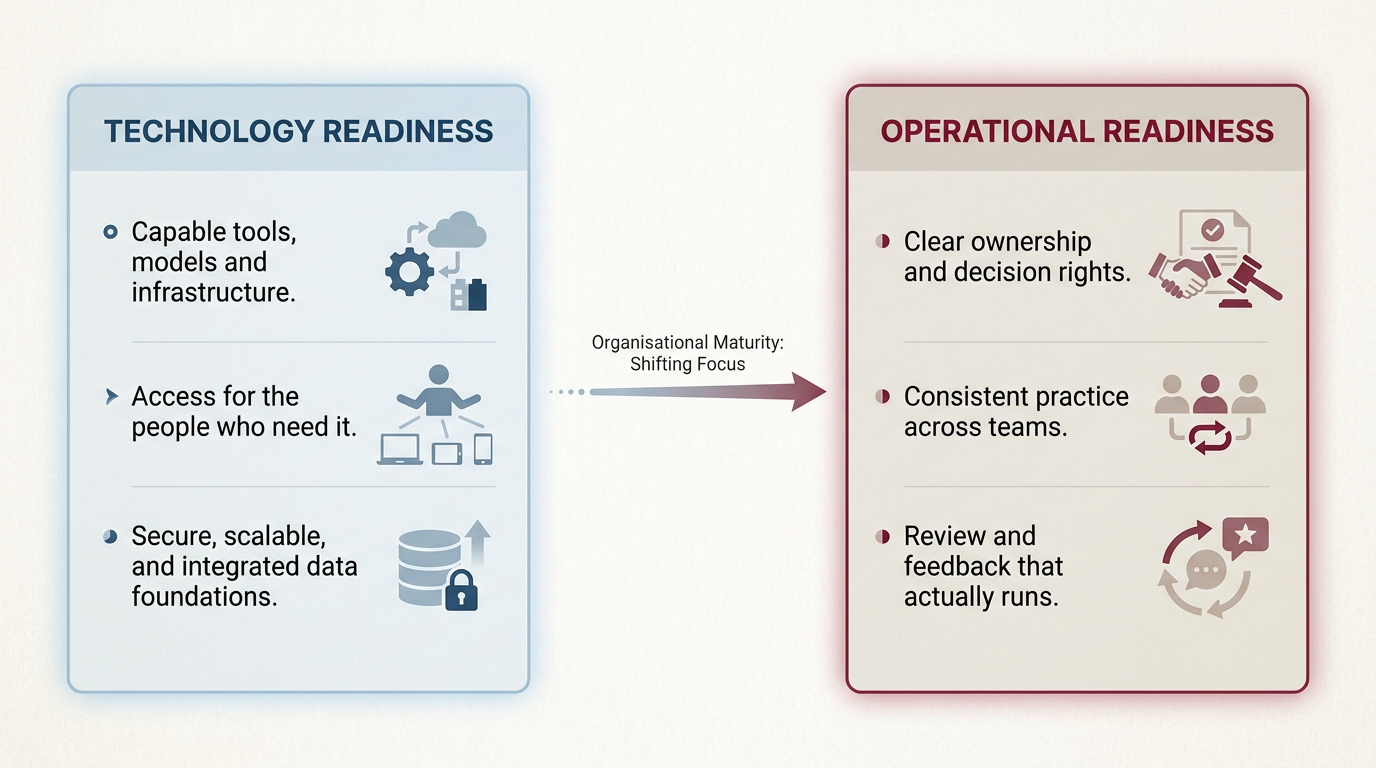
Ownership becomes the live question. Not which tool, but who decides what is acceptable, who reviews the output that matters, and who is accountable when something goes wrong. In immature setups that question has no clear answer, which is usually fine until the day it very much is not.
Consistency starts to matter more than raw capability. Ten teams using AI in ten different ways is far harder to govern, and to trust, than a smaller set of tools used in a shared way. And the dominant risk quietly changes shape. It moves from we are not using this enough to we are using it in ways we cannot see or explain.
Practical guidance for the mature end
The work here is less about adding and more about aligning. A handful of moves tend to carry most of the weight.
• Map decisions, rather than only tools. Wherever AI touches a real decision, name who owns that decision. An inventory of software tells you less than an inventory of who is accountable for what.
• Standardize the few things that genuinely matter, what gets reviewed, what is off-limits, where a human signs off, and leave the rest flexible. Over-standardizing kills the adoption you worked to build.
• Build a feedback path so the organization can improve on purpose. Maturity is mostly the ability to make the same good decision twice and to learn from the times you did not.
• Resist solving maturity by buying more. New capability stacked on weak practice just adds surface area to manage. The next tool rarely fixes a coordination problem.
At the mature end, the constraint is rarely the technology. It is whether the organization can make the same good decision twice.
What this means for leaders
This reframes how AI investment should be read. The return does not come from owning the most capable tool in your sector. It comes from the organization’s ability to use whatever it has consistently and well. Two companies with identical tooling can sit a long way apart on value, and the distance between them is almost entirely operating practice.
Leaders who treat readiness as a procurement problem keep buying, and keep feeling slightly behind. Leaders who treat it as an operating practice tend to compound, because each improvement makes the next one easier. AI governance becomes achievable when an organization treats it as an iterative operating practice rather than a finish line, and that shift is more cultural than technical.
Worth sitting with
If our tooling is genuinely good, what is actually slowing us down, and would more technology touch it at all?
Where AI shapes a real decision in our organization, can I name the person who owns that decision?
Are we trying to mature by buying, or by getting better at making the same good call consistently?
This is the kind of question that benefits from an outside read, because operating practice is hard to see clearly from inside it. If you are at the stage where the tooling is fine and the practice is the real question, an expert in Compass can help you pressure-test where your maturity actually sits, and AI Policies Fail When Nobody Owns Enforcement is worth reading first, since ownership is so often where maturity quietly stalls.


